
Surveying, Mapping and GIS

Exploring all aspects of mapping and geography, from field data collection, to mapping and analysis, to integration, applications development and enterprise architecture...

  • Geospatial Technology, End to End...

    Exploring all aspects of mapping and geography, from field data collection, to mapping and analysis, to integration, applications development, enterprise architecture and policy
Showing posts with label Galileo. Show all posts

Javad is back!

Posted by Dave Smith On 2/04/2008 11:11:00 PM 0 comments

A buzz is going around in the surveying community, JAVAD is back.

Dr. Javad Ashjaee, after a lengthy non-compete hiatus, has returned to the market with Javad GNSS, Inc. - Arguably a highly recognizable figure and driving force behind the GPS success of Trimble Navigation, his former ventures Ashtech and Javad Positioning Systems, which he sold to Topcon in 2000 - he now returns with a number of interesting offerings: The Triumph chip, a 216-channel receiver, said to be able to receive "all existing satellite signals as well as all those planned for the future. This includes all GPS, GLONASS, Galileo, QZSS, WAAS, EGNOS, and Compass/Beidou signals"

Javad is also unveiling a number of other offerings, such as 4-receiver cluster units, the "Victor" handheld data collector, software suites, and many other innovations.
This is GPS on steroids...

Galileo's woes...

Posted by Dave Smith On 8/21/2006 09:35:00 AM 0 comments

I hate to keep harping with my skepticism of Galileo's business model... The Space Review today echoes my own prior concerns about their business model, given the need to firewall behind encryption in order to succeed - and atop this, concerns about China pulling out as a Galileo partner and instead pursuing their own Compass project.


Technorati tags:
, , , , , , , , , , , , , , ,

Galileo Codes Cracked

Posted by Dave Smith On 7/10/2006 03:54:00 PM 2 comments

I have previously voiced my skepticism of Galileo's business model as a European GPS provider, as well as reported on many other public critiques which were unfavorable- Now it turns out that the Galileo paid subscriber business model has shown it can be compromised. According to Science Daily, a team at Cornell, when frustrated with the lack of cooperation, were able to monitor Giove-A signals, and able to perform signal processing to reverse-engineer the algorithm used to generate the Pseudo-Random Numbers (PRNs) essential for processing the transmission.


Technorati tags:
, , , , , , , , , , , , , ,

Galileo Blasted by British Drivers

Posted by Dave Smith On 2/12/2006 09:08:00 AM 0 comments

The Association of British Drivers has posted a scathing piece targeting Galileo, with ABD chairman Bryan Gregory saying "Galileo is not a light on the horizon, it is the entrance to an abyss."

While duly crediting some of the benefits of GPS and locational technology, the article looks upon Galileo in particular, as implemented by EU as yet another stealth tax, yet another way to have government monitoring where you go, who you go with, and so on.

The article states that Galileo is the primary mechanism planned for road tolling by the EU, with "car-hating" Britain to be first.

"The EU is already planning to use Galileo to enforce continental-wide road tolling, and the car-hating British government wants to be first. You won't be able to drive nywhere without the EU knowing where you are going, who you are travelling with, and what speed you are travelling at. They will be able to charge whatever they want. One journey, four lapses of concentration that take you slightly over the speed limit, and you'll be banned from driving."

The article further cites other "big brother" practices abroad, with Japanese law forbidding the sale of cellphones that aren't GPS-enabled from 2007 onward, and manufacturers being forced to fit all vehicles with GPS.

... And they were so concerned with liberating themselves from the "evil" yoke of US military - based GPS?


Technorati tags:
, , , , , , , , , , , , , ,

More on new US GPS announcement

Posted by Dave Smith On 1/26/2006 10:13:00 PM 0 comments

The text of Commerce Deputy Secretary Sampson's announcement yesterday has been posted- it lays out a roadmap for future US GPS efforts. The first new component is the new L2C signal, which went operational in the new GPS space vehicle launched last December. L2C is geared toward commercial uses, with higher power for better reception in urban and indoor areas - and hopefully also wooded canopies for surveying applications.

A third new signal is geared for civilian uses in "safety of life" operations, to support airlines, and the National Transportation System. My company, SynTechGp has, among other things, been tracking GPS in Intelligent Transportation Systems applications and for emergency response- this component keys in perfectly. These two new signals are geared toward high output, allowing reliable reception and use in embedded systems that can be utilized for emergency location, such as cell phones.

The fouth new signal is an open, standards-based signal, augmenting the L1 signal but built toward interoperability with GPS efforts in the international community.


Technorati tags:
, , , , , , , , , , , , , , , ,

US not out of the global GPS fray...

Posted by Dave Smith On 1/24/2006 09:29:00 PM 0 comments


EE Times is reporting that the US is raising the GPS bar with a next-generation system that will have dedicated civilian channels. The new GPS vision will be presented this Wednesday, January 25th.


The Commerce Department said Deputy Secretary David Sampson will unveil the new system at a next-generation GPS forum hosted by the U.S. Chamber of Commerce. The upgraded system will include a second civilian GPS channel "enabling significant improvements in accuracy and reliability," the department said in a statement.

Executives from General Motors, IBM, Lucent Technologies and
Trimble Navigation are also scheduled to appear at the GPS forum. Also attending will be members of the U.S. GPS Industry Council along with state officials and university researchers.

As I have said before, it's not a matter of if but rather a matter of when- and how does the global arms war of GPS technology make the economic model look?

Just this month:


Technorati tags:
, , , , , , , , , , , , , , ,

GLONASS complete by 2009?

Posted by Dave Smith On 1/18/2006 11:34:00 PM 0 comments


Russian Information and News Agency Novosti is reporting that Russian Defense Minister Sergei Ivanov has announced in a report to Vladimir Putin that the GLONASS GPS system may be complete by 2009, far ahead of the initial schedule of 2012. Apparently Ivanov has determined that the program can be accelerated without any significant increase to cost. Ivanov states that benefits are geared toward civilian use, as opposed to military purposes. He states that by 2007, the GLONASS constellation could be fully servicing Russia, and by 2009 be fully servicing a global community. Perhaps some of these gains come through their partnership with India on space projects.

I wonder, yet again, how all this affects the aspirations of Galileo.

I have been tracking the unfolding GLONASS and Galileo saga (or perhaps slugfest?):


Technorati tags:
, , , , , , , , , , , , , , , , ,

Galileo versus NAVSTAR Redux

Posted by Dave Smith On 1/16/2006 01:04:00 PM 0 comments

While I've generally discounted a lot of the Galileo hype, The Space Review today has a very insightful article discussing a different angle on the "arms race" between Galileo and NAVSTAR GPS- the chronograph battle. Essentially their take on it is about the efforts of the Galileo team to build their technology on clocks based on hydrogen masers (Microwave Amplification by Stimulated Emission of Radiation), which yield sub-nanosecond time accuracy, as opposed to the older cesium and rubidium atomic clocks used by the US NAVSTAR GPS effort.

The article mentions that the cost of maser-based technology would add $250,000 to the cost, however USAF and the Interagency GPS Executive Board had apparently rejected masers as too costly. I expect that mass of the units and infrastructure to support the varying technologies may also have some more impact on things as well.

Currently Symmetricom has the contract for the next-generation NAVSTAR birds, to use proprietary "optically pumped cesium beam technology", as opposed to the passive hydrogen maser to be used by Galileo.

Will there be an "chronometric arms war"? I'm still not sure there will. Currently NAVSTAR GPS is adequate for most navigation tasks, and the surveying community has developed solutions like CORS to allow millimeter-level processing of points. Ultimately there may be single-receiver solutions that allow realtime millimeter-level accuracy, but I'm not sure that Galileo alone is the solution or enough of a push.


Technorati tags:
, , , , , , , , , , , , , , ,

And yet more navigational satellites announced...

Posted by Dave Smith On 1/09/2006 08:46:00 AM 0 comments


Several Indian journals, such as the Deccan Herald, NewKerala.com, and others are reporting that the Indian Space Research Organization (ISRO) has announced the planned launch of a constellaton of eight regional navigational satellites, to serve India.

This system, dubbed Indian Regional Navigation System (IRNS) will work in addition to GAGAN (GPS-Aided Geo Augmented Navigation), which goes live next year, based on NAVSTAR and GLONASS satellites.

Additionally the article makes note that ISRO is responsible for the launch of 6 Russian GLONASS satellites, three of which ISRO is also responsible for building.

Incidentally, India is a signatory to the GALILEO project- perhaps they are just hoping to hedge their bets, or more likely, hoping to capture some of the launch business.

So in the past month, we have news of launches and planned activity from NAVSTAR, GLONASS, GALILEO, UK Ministry of Defense, Kazakhstan, and multiple programs in India. I think the question of dependence on US NAVSTAR GPS is rapidly becoming moot, and the commercial business model of Galileo may rapidly be dwindling in market share potential.


Technorati tags:
, , , , , , , , , , , , , , , , ,

Galileo Hype?

Posted by Dave Smith On 1/06/2006 09:55:00 AM 0 comments


Continuing on the discussion of Galileo and associated hype - In an opinion piece running in a few international newspapers, Canadian journalist Gwynne Dyer refers to some critics of Galileo calling it “the Common Agricultural Policy of the sky”, a reference to the EU’s "expensive and wasteful farm support program". Dyer further goes on to suggest it's "not commercial" and it's "not political" but nonetheless goes on about the reason behind the Galileo launch being to lessen reliance on what is a US military system, arguing that should the US shut Navstar down or resume S/A, many mission critical systems, such as flight control could be adversely affected. Well, it still sounds at least partly political to me...

At a cost of 3.2 billion Euros, that's a lot of money spent on what-ifs, notwithstanding the fact that other systems are also online (GLONASS) and in the process of lauch.

Dodging (for the moment at least) the more caustic digs made by a few other articles covering the Galileo launch, that virtually characterize Galileo as a "slap in the face to the American Empire", I would contend the same availability argument potentially applies to any such system, be it NAVSTAR GPS, GLONASS or even Galileo itself. If there's a problem with one of the SVs, constellation geometry is affected, and positional accuracy declines significantly or can become wholly unavailable due to poor Geometric Dilution of Precision factors. As a composite factor, GDOP is intimately tied with all aspects of horizontal and vertical location, along with time.

GDOP = √ σn2 + σe2 + σh2 + σt2 + c2


As surveyors we know that GPS constellations and ability to collect usable data is variable, based on the ever-changing collection of SVs available at a given point in time, making mission-planning and long observations a good idea. And this is WITHOUT the vagaries of S/A or wartime activities. Additionally, for survey-grade work, we rely on such tools as CORS stations and OPUS to perform correction. What correction of Galileo data will be possible? What ultimate levels of geodetic accuracy can we expect? Also, the discussion of "interoperability" between Galileo, Navstar and GLONASS leaves me perplexed. Currently Navstar and GLONASS are separate and not interoperable, so how could Galileo be interoperable? That interoperability piece will play itself out in the receivers in the ground-based processing of the data, and has little to do with Galileo.

"Killer App" and hypeworthy Galileo is not, at least as I currently understand the system. Particularly if it, as paid-subscriber-based offering competing with others that are free. But on the other hand, if we ultimately end up with multiple systems and plenty of availability and redundancy, so much the better.


Technorati tags:
, , , , , , , , , , , , , ,

GPS Limited in 2006 Dakar Rally

Posted by Dave Smith On 12/30/2005 01:15:00 PM 0 comments


I found this interesting- According to CNN, the use of GPS will be limited in the 2006 Dakar rally, to go back to more traditional navigation techniques. Historically, this race has had vehicles manned by a driver and co-pilot, and part of the test of human and mechanical endurance was the test of being able to traverse the often challenging puzzles presented by the landscape.

Since 1978 this race has been run- This year, it kicks off starting tomorrow, December 31, 2005, and traverses over 9,000 km, from Lisbon through the most rugged terrain of the hinterlands of Portugal, Spain, Morocco, Mauritania, Mali, Guinea and Senegal.


The progress can be tracked online at the official site.

Do I take it that this means we won't be seeing any endorsements of Galileo from the Dakar organizers?


Technorati tags:
, , , , , , , , , , , , , , , ,

Galileo / GIOVE-A

Posted by Dave Smith On 12/29/2005 01:21:00 PM 0 comments


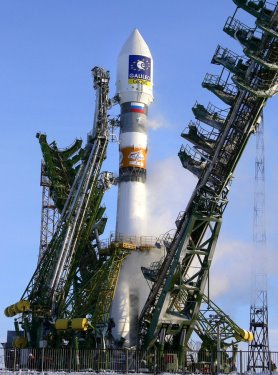
To follow up on my previous article Surveying, Mapping and GIS: Russian Christmas (GLONASS), the EU's first Galileo component, the GIOVE-A vehicle has been successfully launched...

Congratulations to the ESA team, and it will be interesting to see how things unfold. When I lived in Germany, my house was in a small town called Weiterstadt, which was near Darmstadt in Hessen (Central Germany), where the European Space Operations Centre (ESOC) resides... We had a few friends who worked for ESOC.


Technorati tags:
, , , , , , , , , , , , , , ,

Russian Christmas (GLONASS)

Posted by Dave Smith On 12/26/2005 02:31:00 PM 0 comments

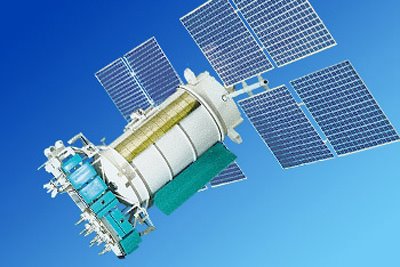
GLONASS SatelliteRussian media brings news from the Baikonur space complex in Kazakhstan of the successful launch of three new GLONASS space vehicles aboard a Proton-K launch vehicle. This will bring the complement of GLONASS SVs to a GPS constellation well over half of the target 24.

Russian president Vladimir Putin has further announced that he wants to see completion of this russian GPS system by 2008.

Although the two systems are not completely interoperable, combined GPS+GLONASS receivers are available from a number of leading manufacturers. The continued launching of the GLONASS program and it's support by President Putin will be a boon to surveyors using GPS+GLONASS systems here in the United States, and will provide additional availability for added possibilities, to allow increased visibility and availability of SVs.

Meanwhile, another system to keep an eye on is the European Galileo effort. A test vehicle as part of the Galileo effort is being launched at Baikonur tomorrow, according to the Independent. This vehicle, 'Giove-A' or 'Galileo In-Orbit Validation Element A' will establish a testbed and will reserve the allocated region of frequency spectrum for the Galileo effort. Ultimately, the Galileo program will establish a constellation of 30 SVs, going into service in 2008 and expected to be fully operational by 2010.


Technorati tags:
, , , , , , , , , , , , , , , , ,

Search